
Why Your Marketing Isn’t Working (Even If Everything Looks Right)
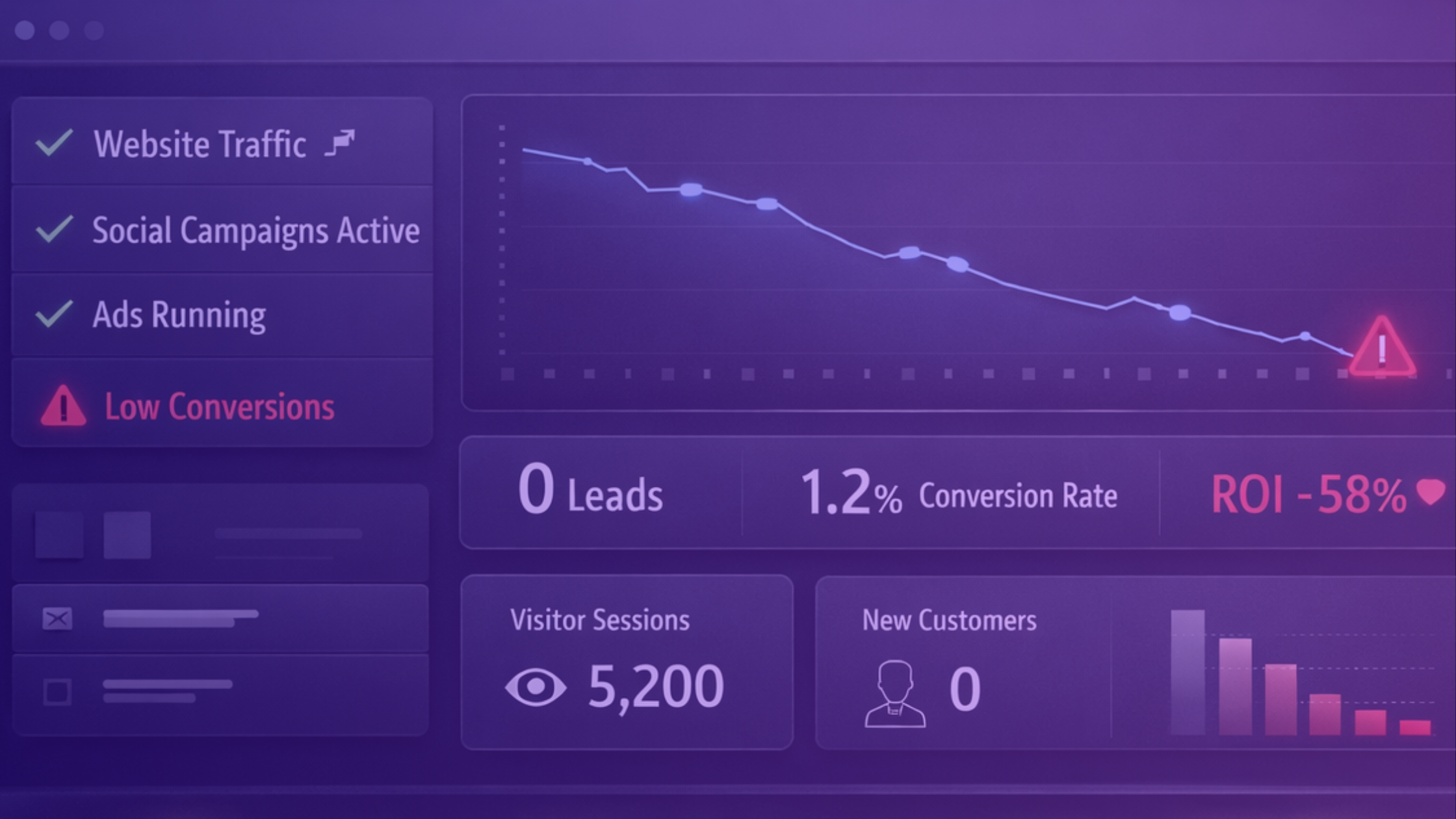
Marketing today can feel deceptively successful on the surface. Your website looks polished, your social media is active, your ads are running, and your brand appears consistent. Yet despite all of that visible effort, the results don’t match expectations. Leads are inconsistent, conversions feel unpredictable, and growth stalls without a clear reason.
This disconnect is more common than most businesses realize. Hidden gaps in strategy, data tracking, and messaging can quietly undermine even the most well-executed campaigns.
The Illusion of “Everything Looks Right”
Modern marketing often emphasizes visibility. A well-designed website, strong branding, and active campaigns can create the impression that everything is working as it should. However, appearance alone does not guarantee performance.
Many businesses invest heavily in execution without stepping back to evaluate whether all components are aligned toward a clear objective. As a result, marketing becomes a collection of disconnected efforts rather than a unified system designed to drive measurable outcomes.
The Hidden Cost of Operating Without a Clear Strategy
A strong strategy answers fundamental questions. Who is the target audience? What problems are being solved? What differentiates the brand from competitors? And most importantly, how does each marketing channel contribute to a larger goal?
When these questions go unanswered, campaigns may generate traffic or engagement, but they rarely convert at a meaningful level. Messaging becomes inconsistent, targeting lacks precision, and budget allocation becomes inefficient.
Over time, this lack of direction leads to frustration, as businesses invest more resources without seeing proportional returns.
Weak Data Tracking Creates Blind Spots
Without reliable data, decisions are often based on assumptions rather than insights. A campaign may appear successful based on impressions or clicks, but those metrics don’t always translate into qualified leads or revenue.
Proper tracking goes beyond surface-level analytics. It requires clear attribution, defined conversion points, and the ability to connect user behavior across multiple touchpoints. When these elements are missing, businesses lose visibility into the customer journey.
This lack of clarity makes it difficult to optimize campaigns, refine targeting, or justify marketing investments. In many cases, opportunities for improvement exist but remain undiscovered because the data isn’t telling the full story.
Misaligned Messaging Undermines Conversion
Misalignment occurs when the message does not match the audience’s needs, expectations, or stage in the buying process. For example, a business may focus heavily on features when the audience is more interested in outcomes. Or messaging may be too broad, trying to appeal to everyone instead of speaking directly to a specific group.
When messaging lacks clarity or relevance, potential customers may engage initially but hesitate to take the next step. They may not fully understand the value being offered, or they may not feel confident that the solution is right for them.
Effective messaging requires a deep understanding of the audience and a consistent narrative across all channels. Without that alignment, even the most visually appealing campaigns can fall short.
Channel Activity Doesn’t Equal Effectiveness
Many businesses spread their efforts too thin, trying to maintain a presence on every platform without fully optimizing any single one. This approach often leads to inconsistent performance and diluted impact.
Instead of focusing on quantity, successful marketing prioritizes quality and alignment. Each channel should serve a specific purpose within the overall strategy. Content, ads, and user experience should work together to guide prospects through a clear journey.
When channels operate in isolation, opportunities for synergy are lost. Marketing becomes fragmented, and potential customers may encounter mixed messages or disconnected experiences.
Internal Disconnects Can Slow Everything Down
Delays in approvals, unclear expectations, or inconsistent execution can disrupt momentum. Additionally, if marketing teams are not aligned with sales or operations, leads may not be handled effectively once they are generated.
This internal friction often goes unnoticed because it happens behind the scenes. However, it can significantly impact overall performance by creating bottlenecks and reducing efficiency.
A streamlined process, supported by clear communication and defined roles, is essential for maintaining consistency and maximizing results.
The Importance of Continuous Optimization
What works today may not work tomorrow, especially as consumer behavior, technology, and competition continue to evolve. Without a commitment to continuous optimization, performance can gradually decline.
This process involves regularly reviewing data, testing new approaches, and making informed adjustments. It also requires a willingness to challenge assumptions and adapt strategies based on real-world results.
Businesses that embrace this mindset are better positioned to identify issues early and maintain consistent growth over time.
How Horton Group Helps Align Strategy, Data, and Messaging
Horton Group focuses on aligning strategy, data, and messaging to create cohesive marketing systems that drive measurable results. Our approach emphasizes understanding the full picture. This includes identifying gaps in strategy, improving data tracking for better decision-making, and refining messaging to connect more effectively with target audiences.
Connect with us at Horton Group to gain clarity, refine your approach, and build a marketing strategy designed to perform.